Movement stable: the modern stable system for horses – for species-appropriate husbandry and horse welfare.

Planning sustainable and species-appropriate
horse husbandry

Modern horse husbandry combines animal welfare, efficient processes and economic success. Whether you are building a new active stable, converting an open stable or optimising existing facilities, well-thought-out stable concepts create the basis for healthy horses and a well-organised, economical operation.

The 6 major F

principles of sustainable horse husbandry.

These six principles will help you
to make your horse husbandry successful,
animal-friendly and cost-efficient in the long term.

Several horses with different coat colors gallop one after the other along a path. To the left of the path is a green meadow. The background is slightly blurred, clearly highlighting the horses in the foreground. Behind them, trees and vegetation can be seen, giving the scene a natural and open atmosphere. Trail paths are an integral part of HIT active stables.

Freedom

Free movement in open stables, active stables and paddocks promotes health and social behaviour.
Two brown horses stand close together, their heads nose to nose. Only the animals' heads are visible in the picture. The background is blurred and has a wintry feel, with bright, whitish areas. The scene conveys closeness and tranquility between the two horses. A large “F” in the HIT active stable concept stands for “friends.”

Friends

Social contact in groups strengthens psychological well-being.

In a large horse stall, there is a large bale of hay in the middle, surrounded by loose hay. Four horses stick their heads out of their respective stalls and eat together from the hay. The scene shows a central feeding area that is accessible from several stalls.   Needs-based hay feeding with the transponder-controlled HIT hay dispenser EXCLUSIVE in the four-stall with labor-saving large bale feed

Feeding

Rations tailored to requirements and spread throughout the day, adapted to breed, age and performance, ensure a healthy feeding regime.

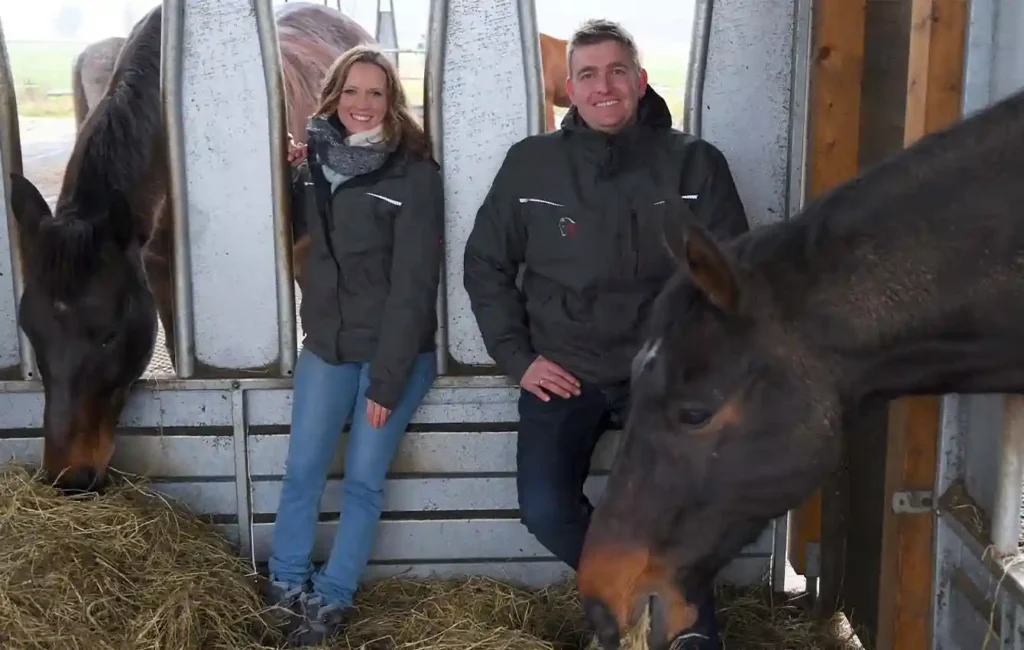
The picture shows the inside of a horse stall. Horses standing outside stick their heads through two separate openings to eat hay. Inside the stall, a woman sits on the edge of the left opening and a man sits on the edge of the right opening. Both smile at the camera while the horses calmly eat from the openings next to them. A large “F” in the HIT active stable concept stands for “focus.”

Focus

Knowledge of horse husbandry and good management increase the welfare of both humans and horses.

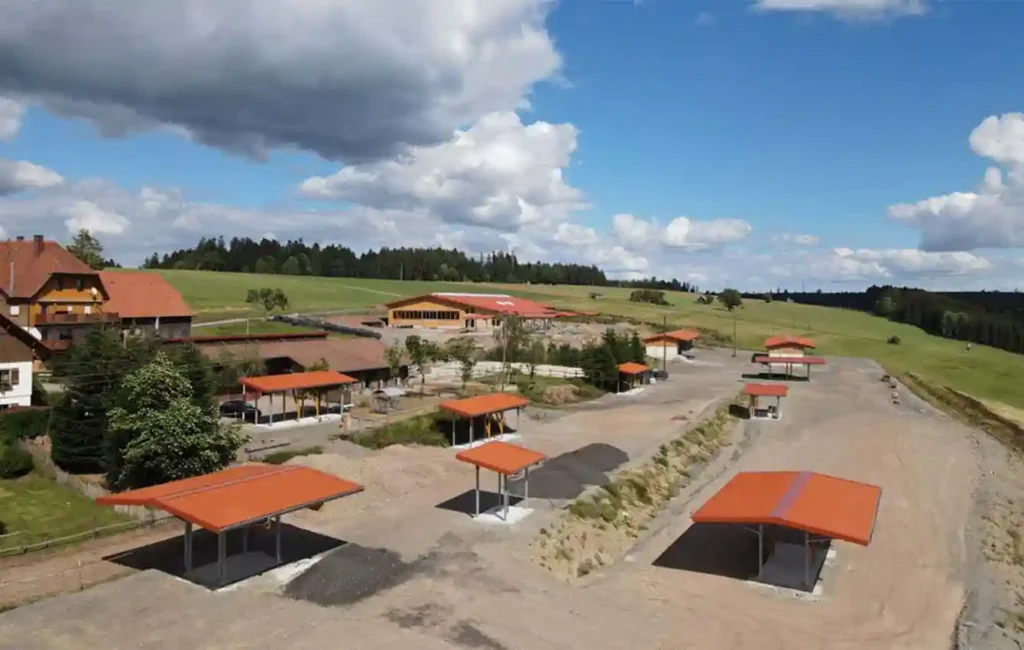
The image shows a farmyard from a bird's eye view. Several small shelters or open shelters are scattered across the grounds. There is a larger house on the left-hand side. The entire area is surrounded by green meadows and trees and is located on a slight slope. The photo provides a comprehensive overview of the farm and its outdoor areas. The principle of the HIT active stable: Spatial separation of the functional areas marketplace (lying area, automatic feeders, racks, drinking troughs) and structured walkways or trails including rolling area, deadwood hedge, horse stairs, tree trunk maze, water ford, etc.

Finance

Investing in sustainable horse husbandry offers horse owners significant long-term financial benefits.

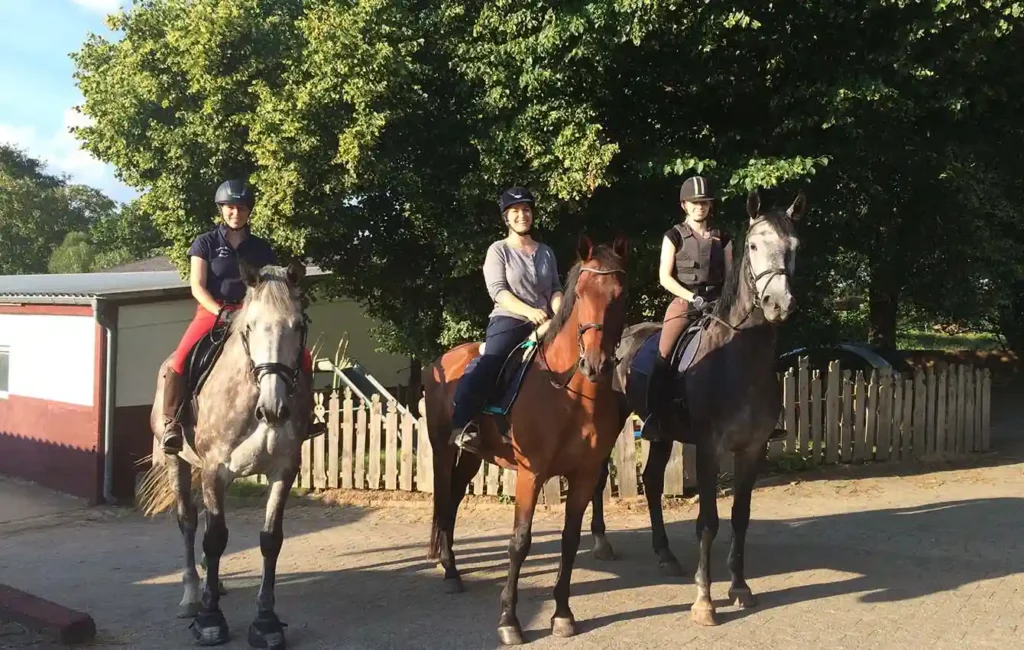
Three horse riders sit on their horses and smile at the camera. The horses stand calmly next to each other. Trees, a house, and a fence belonging to the house can be seen in the background. The scene appears friendly and harmonious and conveys a moment of relaxed leisure time in an equestrian setting. A large “F” in the HIT active stable concept stands for “leisure.”

Free time

Leisure time Optimised processes at the horse farm create space and time for training, care and relaxation.

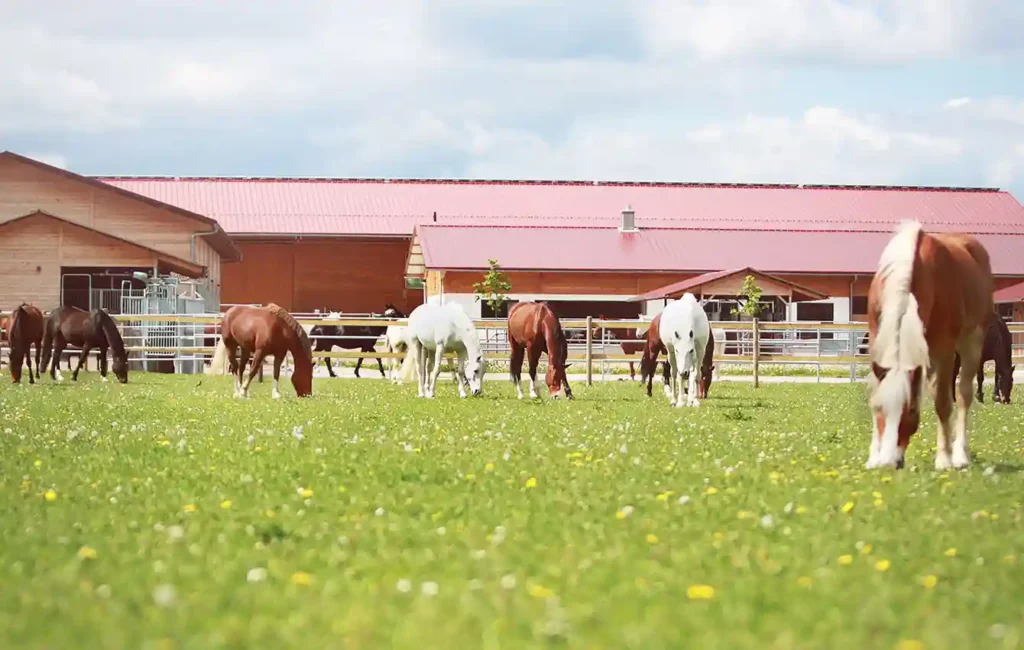
Several horses stand close together in a green pasture. The animals have different coat colors and appear calm. Behind them is a large, modern horse stable with open areas and visible stalls. The scene conveys a peaceful stable and pasture environment.    Sustainable horse husbandry with the HIT-Active Stable concept
Modern stable concepts –
New construction & conversion

Consider the right type of housing: exercise requirements, social contact, safety, space and workload. Whether open stables, paddock trails, active stables or well-planned individual boxes – the focus is always on animal welfare and economic efficiency.

Implementing needs-based
Feeding

From hay racks to automatic concentrate feeders and hay dispensers – a suitable feeding system ensures that every horse receives the right amount at the right time. Practicality and functional reliability are crucial here.

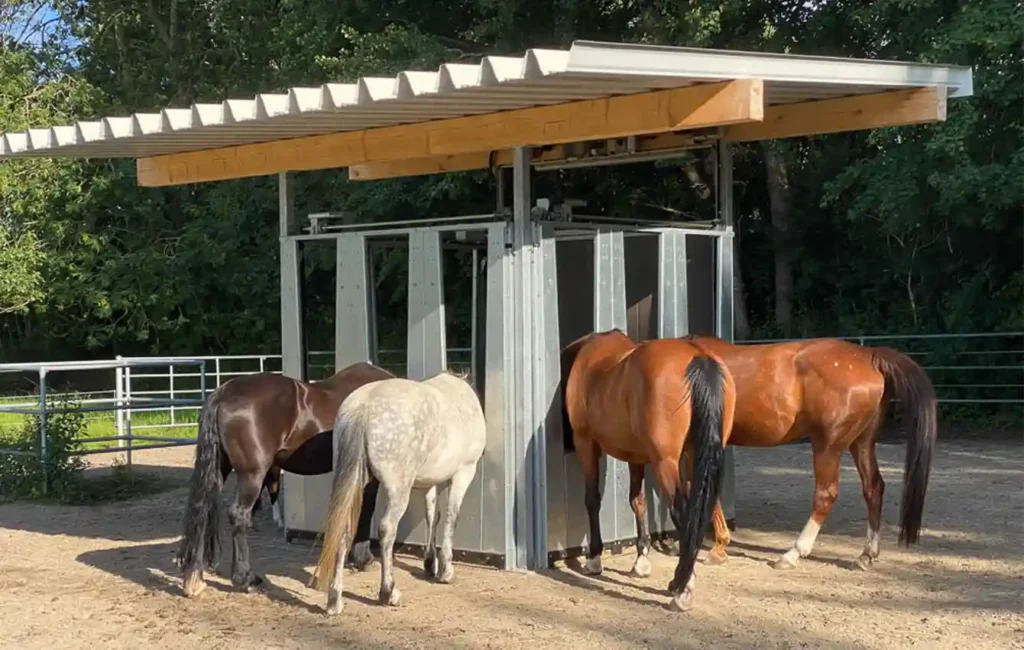
Four horses with different coat colors stand on an area covered with light-colored sand and eat from a large feed box with several openings next to each other. Several trees can be seen in the background. The scene shows a group feeding situation outside a horse stable.   Time-controlled HIT hay dispenser MULTI-9 with roof supports and swing gate
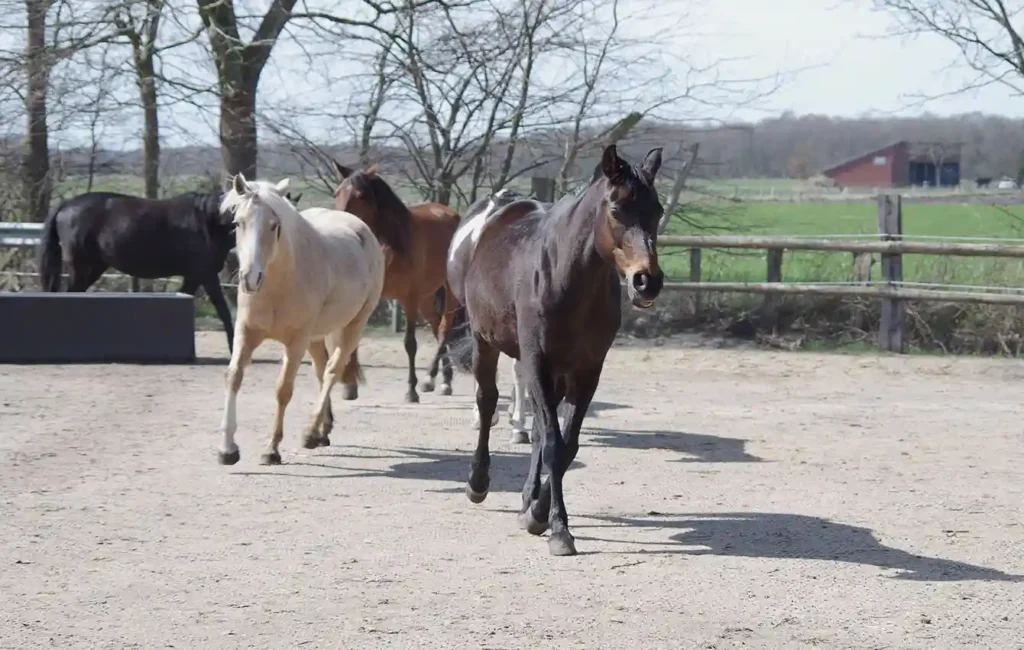
Four horses with different coat colors run one behind the other across a sandy area that looks like a riding arena or paddock. The animals move in the same direction and form a slight line. The background consists of a fence that borders the area and separates it from the trees in the background and the adjacent meadow.   Horse-friendly floor reinforcement with the HIT-Active Stable mat ENJOY
Horse-friendly flooring
for indoor and outdoor use

In order to engage in species-specific behaviour, horses require optimal flooring both in their exercise areas and in their resting areas. Active stable mats, floor grids and horse beds provide optimal equipment for all functional areas of horse husbandry.

Consulting
for sustainable horse husbandry

From strategic orientation and stable planning to operational optimisation – expert advice supports you from the initial idea to the final implementation. This allows you to combine animal health, work efficiency and economic viability.

The picture shows the inside of a horse stall. Horses standing outside stick their heads through two separate openings to eat hay. Inside the stall, a woman sits on the edge of the left opening and a man sits on the edge of the right opening. Both smile at the camera while the horses calmly eat from the openings next to them. A large “F” in the HIT active stable concept stands for “focus.”
HIT-Active Stable Imagevideo